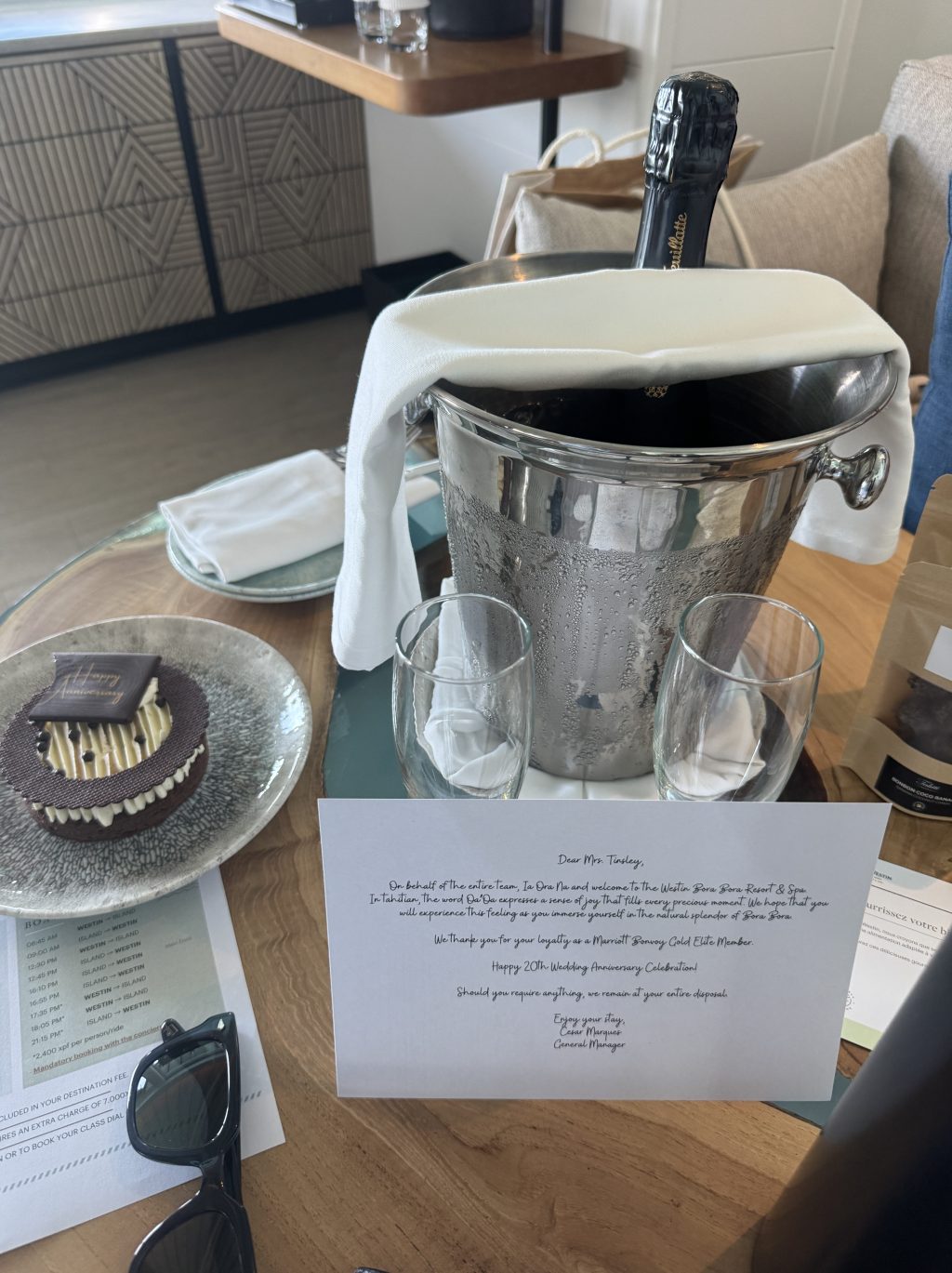
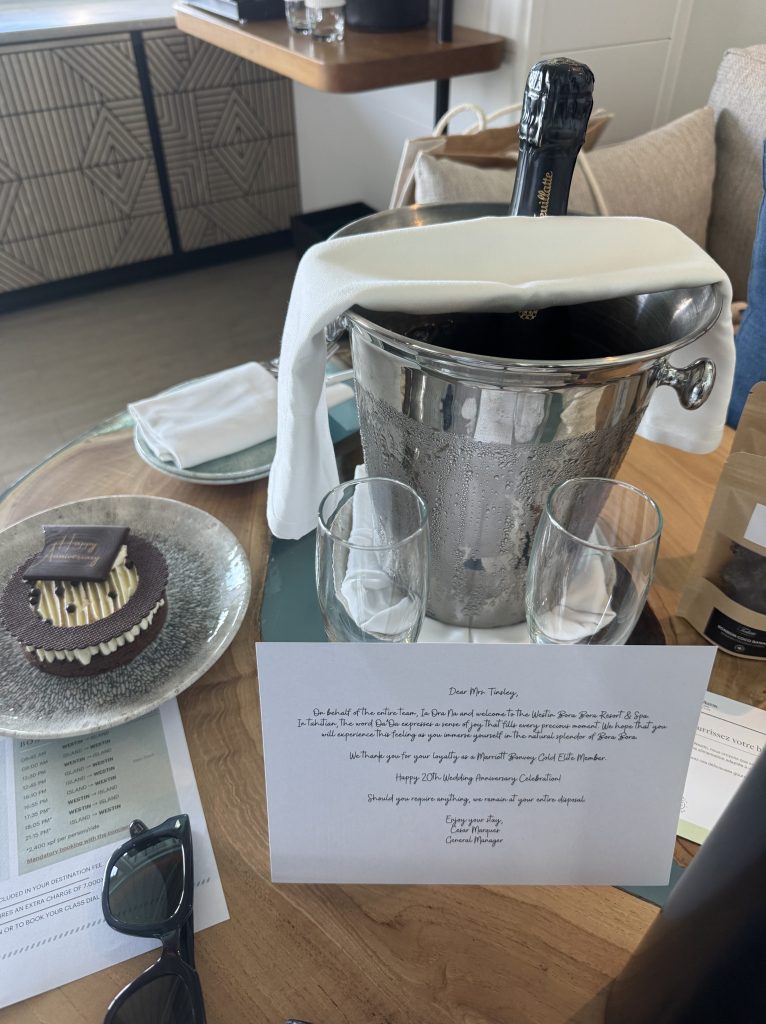
One of my favorite travel tips takes five minutes and costs nothing: send the hotel a friendly email before you arrive. I usually send 2-3 days before we arrive.
We’ve done this before special trips, and it’s gotten us treats, room upgrades, complimentary breakfast, and other thoughtful extras. It doesn’t work every time, but sometimes a simple email makes a stay feel even more special.
You don’t need to be celebrating something to ask for a room preference. But if you’re traveling for an anniversary, birthday, or another occasion, tell them! Just keep it honest, friendly, and appreciative.
I usually start with the hotel’s concierge or guest relations team. Include your confirmation number so they can easily find your reservation, and mention your loyalty status if you have it. ChatGPT can help you find the contact information for the hotel.
Here’s an email you can copy, paste, and personalize:
Subject: Upcoming Stay | [Dates] | [Special Occasion, if applicable]
Hello [Hotel Name] Team,
My [husband/partner/family/friend] and I are looking forward to our stay from [check-in date] to [check-out date]!
We’re visiting for [reason for your trip or special occasion], and we’re especially excited about [something you’re looking forward to at the hotel].
If a complimentary room upgrade or a room with [a better view/a higher floor/your preferred feature] is available, we would be so grateful to be considered. I understand it depends on availability, but it would make our stay even more memorable.
[Optional: I’m a member of your loyalty program, with [status level], and always enjoy staying with [hotel brand].]
My biggest tip? Ask nicely and keep your expectations flexible. An upgrade is never guaranteed, and breakfast may depend on your booking or loyalty benefits. We’ve also had stays where the extra was simply a sweet note or a little treat waiting in our room and those touches count, too.
Save this template for your next trip, and follow @the_traveling_tinsleys for more ways to make family travel easier and get more out of your stays.
One thing that stood out to me the whole week: our ship was split almost evenly between families with little kids and retirees celebrating milestones. Two totally different life stages, same dream trip. And I think more and more people are realizing they don’t have to wait for “someday” to make it happen — you just need a plan. So today I’m breaking down exactly how we paid for ours, and all the other ways you can stack points, miles, and a little strategy to make an Alaskan cruise happen sooner than you think.
What We Actually Did
Here’s how we paid for this trip:
Flights: covered w/ points. We used Alaska Airlines via Atmos Rewards (if you didn’t know, Alaska merged with Hawaiian and rebranded their loyalty program to Atmos Rewards, and it’s genuinely one of the better programs out there right now).
Hotels: covered w/ points. We used World of Hyatt points via Chase (I would get this Ink bonus if you haven’t already!). We did the southern passage and needed a night in Anchorage and a night in Vancouver. Hotel cash rates in both cities spike hard during Alaska cruise season (May–September), so this is exactly the kind of trip where points punch way above their cash value. We used Hyatt points for both stays and paid $0 out of pocket for lodging.
Cruise: a monthly payment plan. This is the one people don’t talk about enough. Most major cruise lines let you put down a deposit and then spread the rest of the fare out over monthly payments instead of paying it all upfront. We did exactly that, and it made a genuinely bucket-list-sized trip feel very doable on a normal budget.
Is it worth all this planning?
10000% yes. We didn’t wait until every last dollar was sitting in savings — we used points for the flights and hotels and chipped away at the cruise fare with monthly payments. Was it worth it? Absolutely, without question.
That’s honestly the bigger takeaway from this whole trip: watching that ship full of families and retirees made me realize this dream trip doesn’t have to sit on a “someday” list. People are figuring out how to make it happen sooner — a mix of points, a payment plan, and a little bit of “we’re doing this now” energy. If Alaska has been on your list, I hope this gives you a real, doable roadmap to get there.
If you have questions about any of this — Atmos Rewards, Hyatt redemptions, the Purchase Eraser, any of it — drop them in the comments. I’ll answer all of them. 🐋
—
Have you been to Alaska, or is it on your bucket list? Hit reply or leave a comment — I’d love to hear where you’re dreaming of going next.
Transferring points sounds complicated. It’s not. Once you’ve done it the first time, the whole process takes about two minutes and your points land instantly — no waiting, no fees.
Here’s exactly how I move Chase Ultimate Rewards points to World of Hyatt, screenshots included, plus how the same idea works with other banks and travel partners if Hyatt isn’t your target.
Our suite in Madrid… booked with Hyatt points!
Step 1: Check your card
You need a card that transfers to travel partners at 1:1. My go-to is the Chase Sapphire Reserve.
📌 Heads up: Chase Sapphire Preferred and Ink Business Preferred are moving to a 4:3 transfer ratio starting October 1, 2026. The Sapphire Reserve stays at 1:1.
If you’re not sure which Chase card is right for you, or you’re not planning to fly or stay anywhere in the next year, it’s worth pausing here and reading my full points & miles guide first — it walks through which card actually fits your spending and travel goals before you apply for anything.
Step 2: Open Chase → Travel
In the Chase app or online, tap the Travel dropdown and select “Transfer points to partners.” It’s tucked under the Travel tab, easy to miss if you’ve never gone looking for it.
Step 3: Pick World of Hyatt
Chase transfers to Hyatt at a flat 1,000 Chase points = 1,000 World of Hyatt points. No devaluation, no math required.
Hyatt is genuinely one of the best redemption values in the entire Chase transfer portfolio — its award chart tends to hold more real value per point than most hotel programs, especially for Category 1–4 properties and its all-inclusive resorts.
Step 4: Enter your amount
Type in how many points you want to move. Example: transfer 60,000, you get 60,000 World of Hyatt points. Slide to the amount, hit Next, confirm. That’s it.
Step 5: Points land instantly
No waiting, no fees. Most Chase → Hyatt transfers post in seconds. Now go book that free night.
If you’ve got real spending coming up — a renovation, a wedding, a big business quarter — pairing a personal card with a business card is the fastest way to rack up a transferable balance. A few offers worth knowing about:
> 💼 CARD OFFER: Ink Business Preferred — currently running an elevated welcome bonus.Check current offer →
> 💼 CARD OFFER: Chase Business cards — for those with genuinely large spending categories (think up to 200,000 points combined across offers).See current business card offers →
(Offer terms and bonus amounts change often — click through for the current numbers before you apply.)
Since Ultimate Rewards points from a personal and a business Chase card pool together in one account, opening both a Sapphire Reserve and an Ink card is one of the fastest ways to build a big, flexible balance you can send anywhere — including Hyatt.
Transfer benefits: why this beats booking with cash or a fixed hotel program
Flexibility. Points sitting in Chase Ultimate Rewards aren’t locked to one airline or hotel. You decide where they go based on where you’re actually traveling.
Outsized value. A cent-per-point redemption through the Chase portal is fine. A well-timed transfer to the right partner can get you 2, 3, sometimes 5+ cents per point in value.
No blackout dates (usually). Partner award charts, especially Hyatt’s, tend to have far better availability than a hotel’s “pay with points” cash-value option.
It costs you nothing extra. Transfers are free and instant with Chase. You’re not paying a fee to move your own points.
How this works with other banks and partners
Chase isn’t the only bank with a transferable points program, and Hyatt isn’t the only partner worth knowing. The mechanics are basically the same everywhere: earn flexible points, transfer to the partner with the best value for your specific trip.
Other major transferable currencies:
American Express Membership Rewards — transfers to airline partners like Delta, Air Canada Aeroplan, and hotel partner Marriott, generally at 1:1 (some partners run periodic transfer bonuses).
Citi ThankYou Points — transfers to airline partners including Turkish Miles&Smiles and Virgin Atlantic, both known for outsized redemption value on certain routes.
Capital One Miles — a growing list of airline and hotel partners, transfers usually 1:1 or 2:1.5.
Other Chase transfer partners besides Hyatt include United, Southwest, British Airways, Air France/KLM Flying Blue, Virgin Atlantic, and Singapore Airlines’ KrisFlyer — each with its own award chart and sweet spots.
The skill isn’t memorizing every chart. It’s knowing which 3–4 partners consistently punch above their weight for the trips you actually take — and that’s exactly what I break down in the full guide.
Want the full breakdown?
This post covers one transfer, to one partner. My Points & Miles Maximizer Guide covers everything I’ve learned over years of doing this: which cards to get and in what order, every transfer partner worth knowing, how to find the sweet spots on award charts, and how to stack it all into free flights and hotel stays.
The best family vacations are the ones where parents enjoy themselves too.
I love my kids, but I don’t want to spend an entire vacation coordinating meals, entertaining bored children, or feeling more exhausted when I get home than when I left.
That’s why I’m picky about resorts.
When I’m looking for a family resort, I want:
✔️ Great kids clubs
✔️ Family-friendly rooms
✔️ Easy dining options
✔️ Pools and activities for all ages
✔️ Enough downtime that mom isn’t working the entire trip
After researching, touring, and staying at resorts throughout Mexico, these are some of my favorite family-friendly options.
Xcaret Mexico
If your family loves adventure, Xcaret is hard to beat. This one is very high on our list to visit!
What makes it special:
Unlimited access to Xcaret parks Your stay includes admission and transportation to multiple adventure parks, including Xplor, Xenses, Xel-Há, and more.
Unique nature experiences Think underground rivers, caves, wildlife encounters, and eco-adventures you won’t find at a typical beach resort.
Family suites designed for larger groups Many rooms comfortably accommodate families without squeezing everyone into one small hotel room.
Best for:
Families who want more than just pools and beaches and love active vacations.
Finest Playa Mujeres
This resort consistently gets recommended by families for one reason: it makes traveling with kids easy.
What makes it special:
Excellent kids club and teen club Activities are organized and engaging, giving parents a chance to relax.
Large family suites Many room configurations work well for families who want extra space.
Calm beaches The Playa Mujeres area tends to have calmer water than many Cancun resorts.
Best for:
Families with kids of different ages who want a traditional all-inclusive experience.
Club Med Cancun
Club Med is one of the most activity-packed resorts in Mexico.
What makes it special:
Included sports and activities Sailing, trapeze lessons, tennis, archery, and more are included.
Fantastic children’s programming Kids clubs are available for a wide range of ages.
Beautiful location The resort sits on a peninsula with gorgeous water views and multiple beach areas.
Best for:
Active families who want to stay busy all vacation long.
Dreams Playa Mujeres
Dreams Playa Mujeres checks a lot of boxes for families looking for an upscale all-inclusive experience.
What makes it special:
Water park with slides A huge hit with kids and older children alike.
Family suites Many rooms are designed specifically with families in mind.
Access to neighboring amenities Guests can enjoy additional dining and entertainment options nearby.
Best for:
Families wanting a balance of relaxation and activities.
Why it’s my favorite points-and-miles option
This is currently my favorite beach resort to book using points.
One of the best parts is that Dreams Playa Mujeres participates in Hyatt’s all-inclusive portfolio, which means you can transfer Chase Ultimate Rewards points directly to Hyatt and often get incredible value.
Current points strategy:
➡️ Chase Sapphire Preferred currently has an all-time-high 100,000-point offer. Apply here.
➡️ Chase Ink cards are currently offering 100,000-point bonuses as well. Apply here. And if you think you don’t qualify for a business card, you are probably wrong. See my Biz Guide on how to apply using a side hustle like selling on Ebay or FB marketplace.
Those welcome bonuses alone can go a long way toward helping your family book a Mexico resort vacation for a fraction of the cash price.
Hyatt Ziva Cancun
Hyatt Ziva Cancun is one of the most popular family resorts in Cancun for good reason.
What makes it special:
Prime beachfront location The resort sits on a peninsula with water on multiple sides.
Great food For an all-inclusive, the dining options are consistently rated among the best.
Family-friendly without feeling kid-focused There are plenty of activities for children, but adults still feel like they’re on vacation.
Best for:
Families who want a resort that appeals to both parents and kids.
Nickelodeon Riviera Maya
If your kids love Nickelodeon characters, this resort creates a truly memorable experience.
What makes it special:
Massive Aqua Nick water park One of the biggest draws for families.
Character experiences Meet beloved Nickelodeon characters throughout your stay.
Swim-up suites Many rooms feature direct pool access, which kids absolutely love.
Best for:
Families with younger children who want a highly themed vacation experience.
Which Mexico Resort Is Right for Your Family?
If your family loves adventure: ➡️ Xcaret Mexic
If you want a classic luxury all-inclusive: ➡️ Finest Playa Mujeres
If your kids never stop moving: ➡️ Club Med Cancun
If you’re maximizing Hyatt points: ➡️ Dreams Playa Mujeres
If you want a balance for both parents and kids: ➡️ Hyatt Ziva Cancun
If your kids love characters and water parks: ➡️ Nickelodeon Riviera Maya
At the end of the day, the best family vacation is the one that gives everyone something to look forward to—including mom.
As a points-and-miles family, I’m always looking for ways to make these resorts more affordable, and many of our favorite trips have cost a fraction of what most people think they should.
Ready to Start Traveling More for Less?
Grab my free guide to earning points and miles and learn the exact strategies our family uses to travel 10+ times per year without paying full price.
If I had to sum up our stay at the Westin Bora Bora in three words, it would be:
The views. The views. The views.
Every morning we woke up to jaw-dropping views of Mount Otemanu rising out of the turquoise lagoon. It’s one of those places where you find yourself constantly stopping to take another photo because you can’t believe it’s real.
While Bora Bora is famous for its overwater bungalows, what really made this trip special was how easy it was to relax. We spent our days soaking in the scenery, enjoying the lagoon, and taking advantage of everything the resort had to offer.
Our Favorite Things About the Westin Bora Bora
1. The Incredible Views of Mount Otemanu
No matter where you are on the property, the views steal the show.
Whether we were lounging by the pool, biking around the resort, sipping cocktails, or sitting on our deck, Mount Otemanu was always front and center. If you’re looking for that classic Bora Bora postcard view, this is it.
2. The Free Bikes
One of my favorite little touches was the complimentary bikes.
The resort is large enough that having bikes makes it fun to explore, and we found ourselves riding around every day. It’s a great way to take in the scenery and get from one side of the resort to the other.
3. The Lagoon-Style Infinity Pool
The infinity pool overlooking the lagoon was one of our favorite spots to spend the afternoon.
Between the stunning views and the calm atmosphere, it was easy to lose track of time here.
4. The Food and Drinks
The pool and beach menu was surprisingly good.
A few favorites:
Shrimp roll
Tuna poke bowl
Tropical cocktails
The cocktails were excellent, and the resort even offered complimentary rum tastings during our stay. We discovered several local rums that we probably never would have tried otherwise.
5. The Beach and Water Activities
If sitting and enjoying the views isn’t enough, the resort also offers:
Snorkeling
Kayaking
Stand-up paddleboards
We spent plenty of time enjoying the lagoon right from the resort.
Don’t Skip an Excursion
As relaxing as the resort is, I highly recommend getting out on the water at least once.
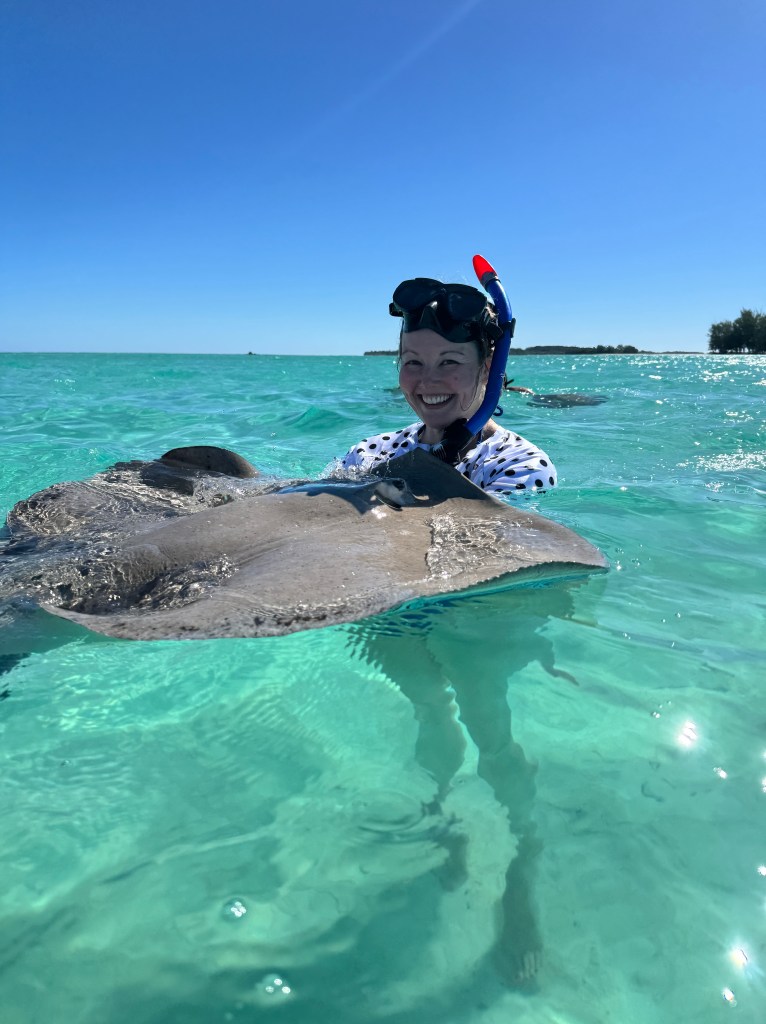
We booked a snorkeling excursion through and it ended up being one of the highlights of the trip.
Not only did we get to snorkel in crystal-clear water, but I also got to:
Hold a stingray
Swim with sharks
Yes, actual sharks.
It’s one of those experiences we’ll be talking about for years.
The Best Meal We Had in Bora Bora: Villa Mahana
If you’re staying at the Westin, make a reservation at Villa Mahana.
Trust me.
The Westin helps arrange transportation, which includes a boat ride followed by a short bus ride. It sounds like a lot of effort, but it was absolutely worth it.
The restaurant is incredibly intimate, with only a handful of tables, creating a truly special dining experience.
Chef David prepares an unforgettable meal, and his mother creates much of the artwork displayed throughout the restaurant.
Everything we ate was exceptional, and it ended up being our favorite meal of the entire trip.
If you’re celebrating something special—or simply want an unforgettable dinner in Bora Bora—put Villa Mahana on your list.
How We Ended Up in Bora Bora for 423,000 Marriott Points
Here’s the funny part.
This trip actually started because I was trying to take my daughter to Taylor Swift’s Eras Tour.
When Marriott announced a promotion allowing members to redeem 500,000 Marriott Bonvoy points for Eras Tour tickets, my husband and I went into points-earning mode.
We opened several Marriott cards and started building our balances as quickly as possible.
Unfortunately, the ticket redemption opportunity didn’t work out.
But the story has a happy ending.
We still made it to the Eras Tour thanks to Capital One cardholder ticket access—and we were left with a huge stash of Marriott points.
Instead of using them for concert tickets, we used 423,000 Marriott Bonvoy points for an incredible stay at the Westin Bora Bora.
Honestly, I think we came out ahead.
The Easiest Ways to Earn Marriott Points
If Bora Bora is on your bucket list, Marriott points can make it much more attainable.
Marriott Bonvoy Cards
One of the fastest ways to earn enough points for a luxury redemption like this is through Marriott credit card welcome bonuses.
100,000 Chase Ultimate Rewards points become 155,000 Marriott Bonvoy points
200,000 Chase points become 310,000 Marriott points
300,000 Chase points become 465,000 Marriott points
That means a welcome bonus that earns 100,000 Chase points could potentially become 155,000 Marriott points during the promotion.
That’s a substantial boost toward a bucket-list redemption like Bora Bora.
Final Thoughts
The Westin Bora Bora exceeded our expectations.
The views of Mount Otemanu are unforgettable, the resort strikes the perfect balance between luxury and relaxation, and there are enough activities and excursions to keep things interesting without feeling busy.
Would I return?
Absolutely.
And thanks to a failed attempt to redeem Marriott points for Eras Tour tickets, we discovered one of the most beautiful places we’ve ever visited.
I’ll be honest — when I first saw “Paze” pop up on the Chase app, I scrolled right past it.
Then I looked at the merchant list and thought: I don’t really shop at any of these places. Nothing that exciting.
But then I dug in and had a “ohhhh” moment — and it came from one specific use case I almost missed entirely: gift cards.
Through NewEgg (one of the Paze-eligible merchants), you can buy gift cards and check out with Paze. Every gift card you were going to buy anyway? Now earning 10x Chase points.
That reframe changed everything. This promo went from “meh” to “actually, I need to set this up right now.”
Here’s what it is, how to set it up, and exactly what I’m doing with it.
What Is Paze?
Paze is a digital checkout system — think PayPal or Google Pay, but built by the major banks. You link your eligible Chase credit card to Paze, then use it as the payment method at participating merchants.
The charge posts to your credit card normally with the merchant’s name. The difference is Chase sees you checked out through Paze — and right now, they’re rewarding that with serious bonus points.
The Promo: 10x Extra Points Through December 31, 2026
Extra 10x points per dollar on top of your normal earning rate
Cap: $1,500 in spending per month — up to 15,000 bonus points monthly
Valid through December 31, 2026
Bonus points post within 8 weeks of the transaction
Authorized user accounts are not eligible
These are bonus points on top of what your card already earns. So if your Sapphire Preferred earns 3x on dining, you’d earn 3x + 10x = 13x total at a Paze-eligible restaurant.
Which Chase Cards Are Eligible?
Chase Freedom Cards:
Chase Freedom Flex®
Chase Freedom Unlimited®
Chase Freedom®
Chase Sapphire Cards:
Chase Sapphire Preferred® Card
Chase Sapphire Reserve®
Eligible United Cards:
United Gateway℠ Card
United℠ Explorer Card
United Quest℠ Card
United Club℠ Card
United MileagePlus® Awards Card
United MileagePlus® Select Card
United℠ Presidential Plus℠ Card
United cards have a slightly higher cap — up to 20,000 bonus miles during the promotion.
How to Check if Your Card Is Eligible
Before setting anything up, confirm your card is in the promo:
Open the Chase app or go to chase.com
Click on your card
Go to the Benefits section
Look for “Boost your points” — Paze should appear there if you’re eligible
How to Set Up Paze
Step 1: Log into your Chase account
App or website both work.
Step 2: Select an eligible card
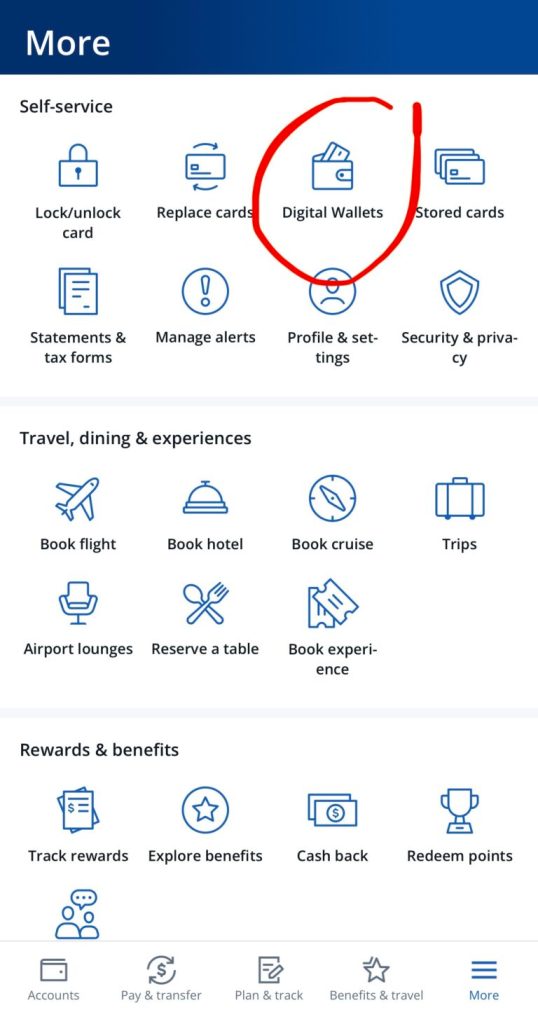
Step 3: Go to Digital Wallets
On the website: Click your card → More → Account Services → Manage Digital Wallets
In the app: Click your card → Manage Account → Digital Wallets
Screenshot
Step 4: Select Paze and verify your identity
You’ll get a text or call with a code, then submit an ID scan. Takes a few minutes but it’s a one-time thing.
Step 5: Link your card(s)
Only Freedom, Sapphire, and United cards earn the 10x. If you want to use multiple cards, link each one separately.
Step 6: You’re done
If you don’t have a Paze account yet, you’ll be redirected to create one. After that, your cards are linked and ready to use.
What I’m Actually Doing With This Promo
Here’s my personal plan through December — nothing complicated, just purchases I was already going to make.
🎁 Disney Gift Cards via NewEgg
We have a Disney trip coming up and I was already going to load up on Disney gift cards to use in the parks. Buying them through NewEgg with Paze means I’m earning 10x+ on purchases I was making anyway. This is the move.
🏡 Airbnb Gift Cards via NewEgg
Same idea — I book Airbnbs regularly, and NewEgg sells Airbnb gift cards. Instead of paying directly on Airbnb with my normal card, I’m buying gift cards through NewEgg with Paze first, then applying them to bookings. More points for the same spend.
✈️ Booking a Domestic United Flight
I have a United flight coming up and I’m paying cash for it. United is a Paze-eligible merchant, so I’ll check out with Paze on united.com and earn the 10x bonus on top of whatever my card normally earns on travel. One thing to note: this only works on cash bookings of direct United flights — not award taxes or partner flights.
The Simple Takeaway
The merchant list is still pretty small (~25 stores), but the gift card strategy opens it up significantly. If you can buy gift cards for places you already spend money — Disney, Airbnb, Amazon, restaurants — you’re earning 10x on purchases you were going to make regardless.
Five minutes to set it up. One habit to check before buying a gift card. Worth it.
New to Points and Miles?
If you’re just getting started and the whole system still feels overwhelming — I made a free 5-step guide specifically for that moment. It covers where to begin, which card to get first, and how to start earning without overcomplicating it.
When Chase announced the new $795 annual fee for the Chase Sapphire Reserve, the internet collectively lost its mind.
And honestly? I get it.
At first glance, $795 sounds wild for a credit card. But after looking closely at the benefits, I realized something important:
For families who already travel, dine out, and use points strategically… this card can actually pay for itself fast.
For our family, this is one of those rare cards where I know we’ll organically use the credits without changing our habits.
The Credits I’ll Actually Use
$300 Annual Travel Credit
This one is basically automatic for us.
Flights, parking, hotels, rental cars, tolls — Chase applies the credit automatically to eligible travel purchases. Since we travel regularly as a family, I know we’ll burn through this almost immediately.
That immediately brings the “real” annual fee down to $495 in my mind.
$300 OpenTable Dining Credit
Chase now offers up to $300 annually toward Sapphire Reserve Exclusive Tables through OpenTable.
As parents who already love date nights when we travel, this feels incredibly usable for us — especially in cities we’re already visiting.
Apple TV+ + Apple Music Included
This benefit alone is valued at about $288 annually.
We already pay for Apple TV+ and Apple Music, so this is another “money I was already spending anyway” credit.
So… Is the Fee Already Covered?
For our family:
$300 travel credit
$300 dining credit
~$288 Apple subscriptions
That’s already $888 in value before even touching the other perks.
And that doesn’t include:
$750 hotel credits
Airport lounge access
Priority Pass
TSA PreCheck/Global Entry credit
DoorDash credits + DashPass
Lyft credits
Hyatt transfer partners
Strong travel protections and insurance
The huge welcome bonus
Why This Matters for Family Travel
One of the reasons I love Chase points is the flexibility.
We recently used Hyatt points for an incredible Costa Rica vacation that would’ve cost thousands out of pocket — exactly the kind of trip that reminds me why points matter so much for families.
If you know how to maximize transfer partners like Hyatt, a strong welcome bonus alone can easily cover multiple nights at luxury resorts.
And that’s where this card really shines.
My Take
This absolutely is not the right card for everyone and not for those new to the points game.
But if you:
already spend on travel and dining,
value airport lounge access,
use streaming subscriptions,
and want to travel more as a family using points…
…I actually think the new Sapphire Reserve is one of the most compelling premium travel cards out there right now.
How a corporate job, a full-time artist, two kids in public school, and one income still adds up to 8+ trips a year.
The question I get the most isn’t where we travel. It’s how.
“How do you guys do it? Like, really. With your jobs? With the kids in school?”
I used to mumble something about being lucky. The truth is the opposite — luck has almost nothing to do with it. We’re not richer than you. We don’t have more flexibility at work. We’re not on vacation. We’re just stubborn about planning, and we’ve built a system that quietly turns the same calendar everyone else is staring at into 8+ family trips a year.
I want to share that system today — every sneaky thing we do — because I am very tired of letting people assume travel is for other families. It is not. It is for you. You just need a strategy.
Pull up the kids’ school calendar. Let’s go.
The setup, so you know I’m not bluffing
Me: Full-time, corporate. Salaried with limited PTO.
Him: Full-time artist. Working from home, but truly working.
Kids: Two of them. Public school. Aged enough to be on a real school calendar with real attendance expectations.
Income: Mostly one. We live on it.
Travel: Two or three big trips a year. Six to seven smaller ones. Domestic, international, beach, city, road trip. The whole spectrum.
I am writing this from the spreadsheet I open every January, the one I’ll open again next January, and the one I’m betting will hold up for the next ten years. The system works.
Here’s what’s in it.
The mindset shift: we’re not lucky. We’re strategic.
This is the part most travel blogs skip, and it’s the most important part.
Every family trip we take starts as a Google Doc. The school calendar is open in the next tab over. A points spreadsheet is open in another. Sometimes I have flight search engines open in three tabs at the same time and a notes app filling up with sweet-spot redemptions and award availability windows.
It looks chaotic. It is not. It is a system, and the system is the whole reason we travel.
If you take one thing from this post, take this: if it isn’t on the calendar, it doesn’t happen.
The seven tactics below are how we make sure the calendar fills up — every year, without fail, without burnout.
Tactic 1 — Every PTO day is on the calendar by January
I get a fixed number of PTO days a year. (I’m not going to say how many, because it doesn’t matter — your number is your number, and the principle is the same.)
The day I get them, I do something most working moms don’t:
I block every single one of them on the calendar before the year starts.
I don’t wait for permission. I don’t wait for a vacation idea. I don’t wait for someone else to plan something. I just put them on the calendar as placeholders, often pinned to a school break or a long weekend to extend it. Some are “TBD.” Some get firm destinations later. Most turn into trips by the end of the year.
The mental shift: PTO isn’t a reward I earn through stress. It’s a tool I deploy through planning.
Tactic 2 — Long weekends are trips, too
The American school year averages 6–8 federal holidays. Then there are the random teacher workdays, MEA days, professional development half-days, and early-release Fridays that schools sneak in.
If you add them up, you’ll find your kids have significantly more days off than you realize.
Every single one of them becomes a long weekend. That’s the rule.
A long weekend isn’t a “mini break” or a consolation prize — it’s a real trip. Three school days off plus one PTO day plus the weekend is a 5-night trip. We use a long weekend the way other families use a full week. The math works out beautifully, the school doesn’t penalize you, and you come back rested.
Recent long-weekend trips that hit that formula: Las Vegas in early spring. Florida Keys in October. New Orleans in February. Charleston in November. None of them required taking the kids out of school.
Tactic 3 — Friday-after-school is our departure time
We live 20 minutes from the airport. This is one of the few things that’s actually lucky, but you can engineer something similar wherever you live.
Here’s the routine: my kids walk out of school at 3pm. By 3:15, we’re in the car. Bags are pre-packed and sitting by the door — I packed Wednesday night. By 4:00, we’re checking in. By 6:00, we’re wheels up.
By the time most families are sitting down to dinner on Friday, we’ve already started our trip.
That single hack turns every weekend trip into a 3-night trip instead of a 2-night trip. Over a year, it adds weeks of vacation.
The pre-pack is non-negotiable. I lay out outfits on Tuesday. I pack on Wednesday. By Thursday night, the bags are zipped and the boarding passes are saved to my wallet. The Friday departure only works if Friday morning is the same as any other morning.
Tactic 4 — The school calendar is my trip planner
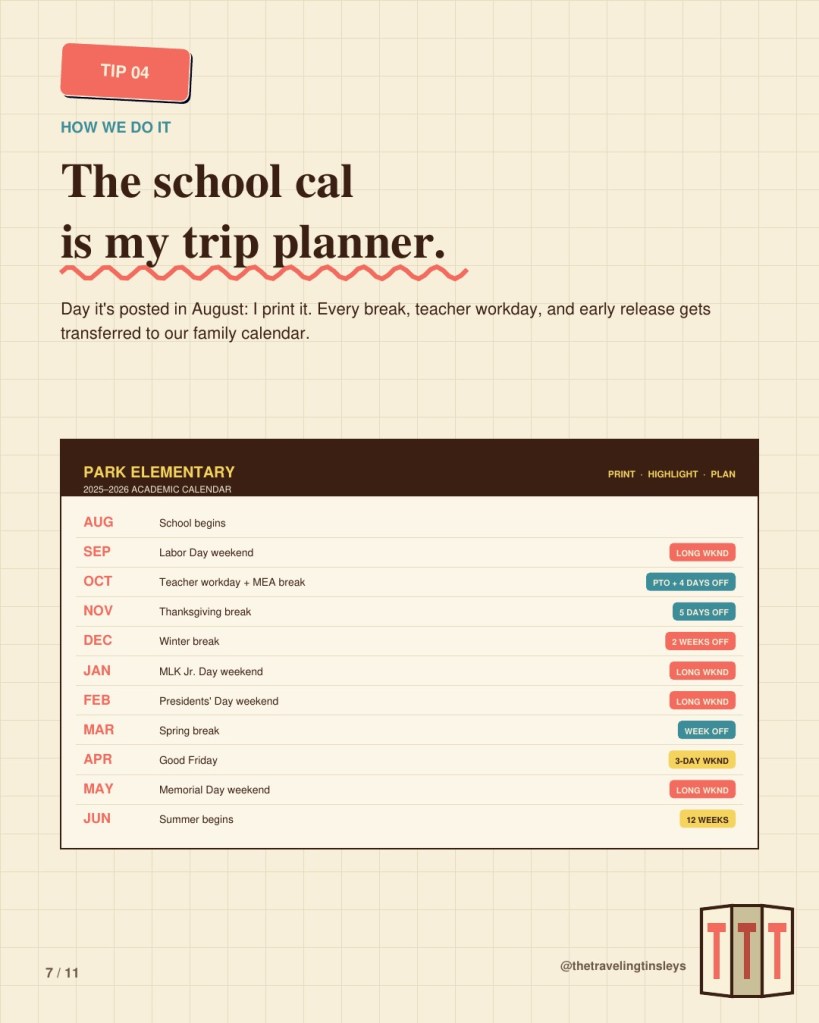
The day my kids’ school calendar gets posted in August, I print it. Two copies. One goes on the fridge. One goes in my planner.
I highlight every break. Every teacher workday. Every early release. Every long weekend. Then I overlay it with my work calendar and the year’s federal holidays.
What I’m looking for: the natural pockets where one or two PTO days can stretch a school break into a real trip.
This is also where I figure out when not to travel. Some weeks are too packed to leave. Other weeks (spring break in March, the week between Christmas and New Year’s) are obvious and I plan around them.
By the end of August, I have a draft year of trip windows. By January, I’ve turned them into a calendar of confirmed bookings.
I keep the school calendar visible all year. Every trip-planning decision starts there.
Tactic 5 — We book a year in advance
This sounds intense. It isn’t.
Most airline award charts open 11–12 months before the flight date. Hotel award charts open even earlier. The best seats — lie-flat business class on the route you actually want, the all-inclusive resort during the week of spring break — get booked the same day they’re released.
By the time most families start thinking about summer, ours is already locked in.
A typical year’s booking timeline for us looks like:
January: Confirm spring break trip. Book flights + hotel on points.
March: Confirm summer big trip. Book flights + hotel on points. Start watching cash flight prices for any sales.
Then through the year, I’m watching every long-weekend window and dropping smaller trips into them as the cash and points line up.
It’s not work, exactly. It’s more like a slow-drip hobby that pays off every couple of months in airline emails that say “you’re confirmed.”
Tactic 6 — I search constantly, and I pivot when I find a deal
This is the difference between a system that works and a system that just sits there.
I have destinations in mind for the year, but they aren’t locked. If award availability for Italy suddenly opens at half the points of Greece, Italy moves up the list. If a points-friendly resort in Mexico drops by 30% on Hyatt’s chart, that’s where we’re going in March.
I check things constantly — like, multiple times a week, often daily during big planning windows. Tools I rely on:
point.me (or Points Yeah) — cross-program flight award search.
Aeroplan’s award engine — for confirming Star Alliance seats actually exist before transferring points.
MaxMyPoint — for hotel award availability across Hyatt, Hilton, Marriott, IHG.
Doctor of Credit and Frequent Miler — for credit card sign-up bonus tracking.
The Hyatt category chart — bookmarked.
The mindset is: I have a wish list, but I’m a deal-chaser. When the deal shows up, I take it. The trip we book is the trip the points wanted us to book.
That’s how we ended up in Matera, Italy in 2022 — not on the original list, but the redemption was incredible and the destination ended up being one of the most special trips we’ve taken as a family.
Tactic 7 — Points and miles do the heavy lifting
I’m going to be honest with you: we travel this much because we are aggressive about points.
We open the right credit cards (and pay them off in full every single month). We rotate through sign-up bonuses every 60–90 days, between me and my husband. We refer each other. We use shopping portals. We’re members of every loyalty program. We track everything in a spreadsheet.
Every sign-up bonus, on average, is one big family trip. Two adults running the cycle thoughtfully means we’re earning enough points each year for international flights for four plus a week of hotel nights. Not theory — that is what is currently sitting in our accounts.
I’m not going to bury the lead: we don’t trade money for travel. We trade time, planning, and points.
If you have decent credit, no card debt, and the discipline to pay statements in full — you can do exactly what we do. I have a whole separate starter guide coming on this (the long version with the cards I’d open first, in what order, with referral links). For now, just know: this is the multiplier that takes 2-3 trips a year and stretches it into 8+.
“But what about…”
Three objections I hear constantly. Quick answers.
“I can’t take time off work like that.”
I’d push back on that. Most working parents have more flexibility than they think — they just don’t ask for it. PTO is yours. Long weekends are yours. Half-day Fridays exist at a lot of companies and almost nobody uses them. You don’t need a whole week off to travel. You need a thoughtful Friday and a Monday.
“My kids are too young.”
Travel with little kids is hard. Travel with little kids is also building family memory and a kid who is comfortable in airports, on planes, in unfamiliar places. Our kids are better travelers at 8 and 6 than most adults I know — because we started in toddlerhood. Easier trips for now, harder trips later, but you build the muscle the same way you build any other family habit.
“We can’t afford this.”
This is the one I want to address most carefully, because money is real and points-and-miles is not magic.
What’s true: we don’t have unlimited disposable income. What’s also true: most of our trip costs are absorbed by points, sign-up bonuses, and credit card credits we’d qualify for anyway. The cash we spend on a trip is usually food, activities, and the occasional splurge — the kind of spending we’d be doing at home anyway, just in a more interesting setting.
If you are in credit card debt, points-and-miles is not the move. Pay that off first. If you have decent credit and no revolving debt, the math changes completely. That’s the system.
A real example, start to finish
Want to see what this looks like in practice? Here’s a recent trip, soup to nuts.
January: My school calendar shows MEA break in October (4 days off). I block it as a trip window and add it to the spreadsheet.
February: I notice award availability opens for fall flights to a destination I’ve been wanting to try. I check point.me — the route prices out cheaper in points than I expected. I confirm seats are real in Aeroplan’s search.
March: I transfer points from a flexible-points card to the airline. I book the flight. Total cost: $0 cash, just taxes.
April: I check Hyatt’s chart for hotels at the destination. Award nights are wide open. I book 4 nights with my Hyatt points. Total cost: $0.
August: School starts. I confirm the trip on the family calendar. Kids are excited.
September: I pre-shop souvenirs, snacks, and packing list. The Wednesday before, I pack. The Friday of, school ends, we leave for the airport.
October: We take a 5-night trip. Total cash outlay across the trip: a few hundred dollars of food and one rental car. No airline ticket spend. No hotel spend.
I started the planning 8 months out. The booking part took about 90 minutes total, spread across the year.
That’s the whole game.
If we can do this, so can you
This is the part I want to stay on.
We are not a special family. We’re not richer than you. We are not luckier than you. We have the same number of hours in the day, the same number of weeks in a year, and the same Google Doc you have.
What we have, that I want you to have, is the belief that this is figureoutable. The school calendar is figureoutable. The PTO calendar is figureoutable. The points are figureoutable. The Friday-after-school airport run is figureoutable.
Build the system. Trust the system. The trips show up like compound interest.
Your turn
I want to hear from you. What’s the one sneaky thing you do to make travel happen? The hack that other moms in your life don’t realize you’re running? The little planning move that turns “we should travel more” into actual boarding passes?
Drop it in the comments. I’m collecting a list, and I want it to be loud, honest, and useful.
If you found this helpful, the best thing you can do is share it with a fellow mom who keeps saying she wishes her family traveled more. She doesn’t need permission. She needs a system.
I’m cheering for you.
— Maggie
P.S. The Points + Miles Starter Guide is coming soon. If you want to be the first to know when it drops — including which cards I’d open first and in what order — make sure you’re following along on Instagram @thetravelingtinsleys or drop me your email.
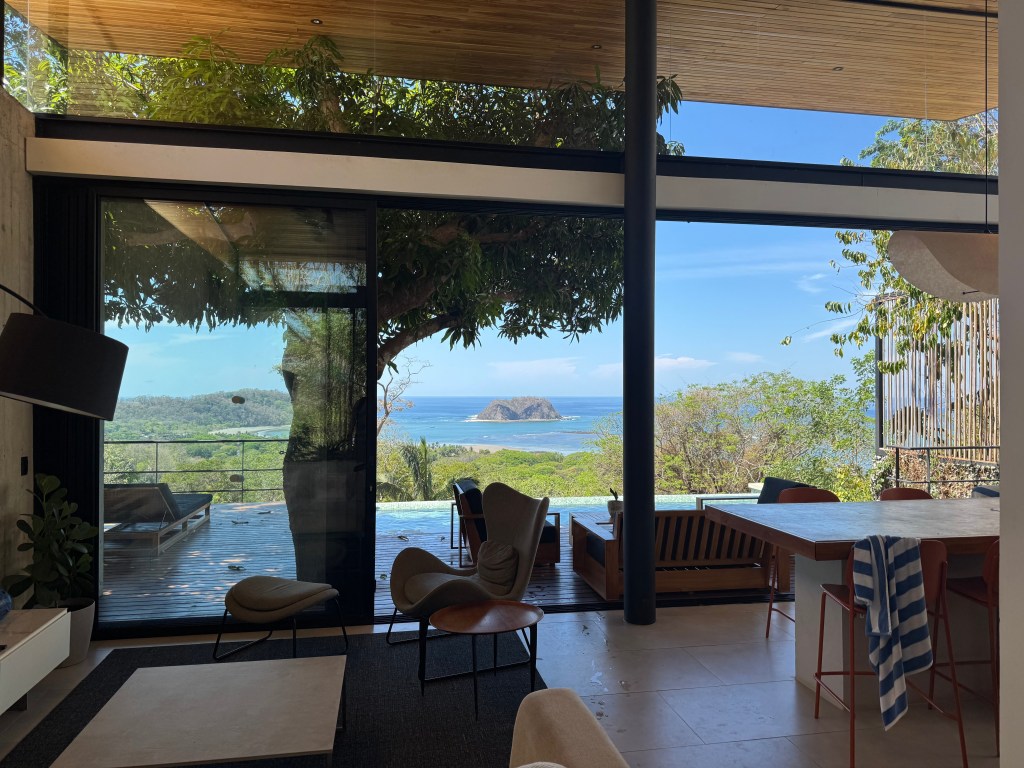
Our trip to Costa Rica was magical. I’m going to break down each part of our stay and how we used points and miles to make it happen.
🌊 The Airbnb of my dreams
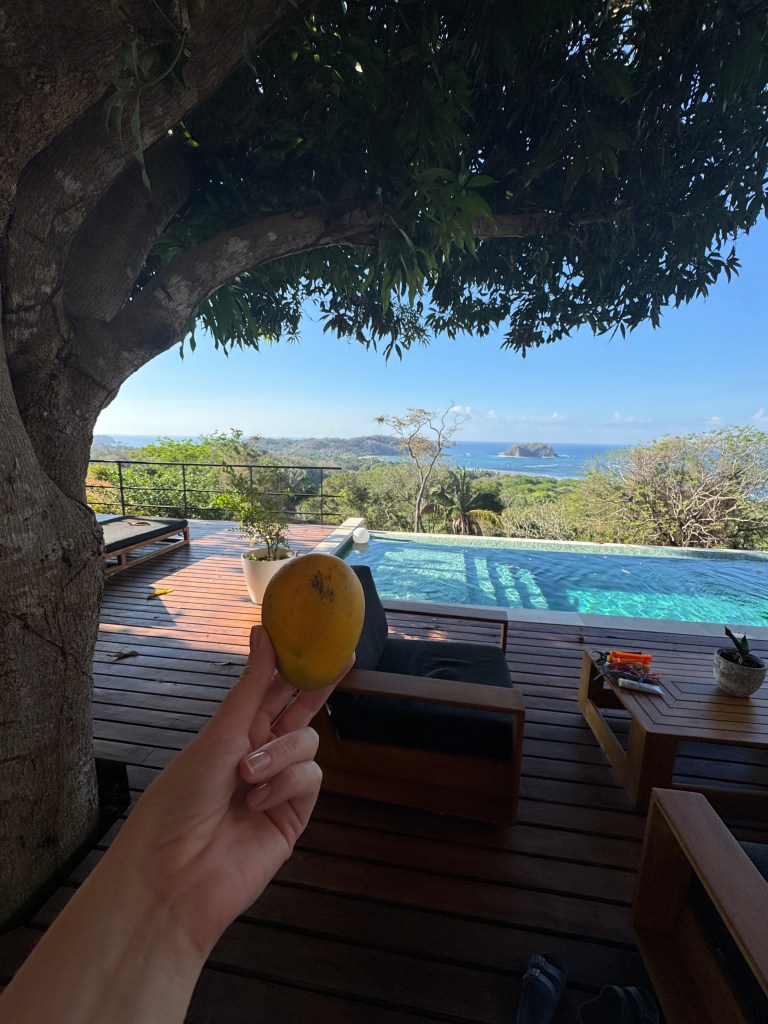
First of all…this Airbnb was everything. Think: insane ocean views, a private pool, and the kind of peaceful jungle vibes that make you forget what day it is.
It’s perched up on a hillside overlooking Sámara, and we were obsessed from the moment we walked in.
Picking a mango from the tree the house was built around
A quick heads up for families: This property is not designed for young kids. There’s a steep cliff, open spaces, and it’s definitely not kid-proof. If you’ve got older kids, you’ll be fine—but I’d be cautious with littles.
That said, my kids still had the BEST time:
They lived in the pool
Loved the boogie boards provided
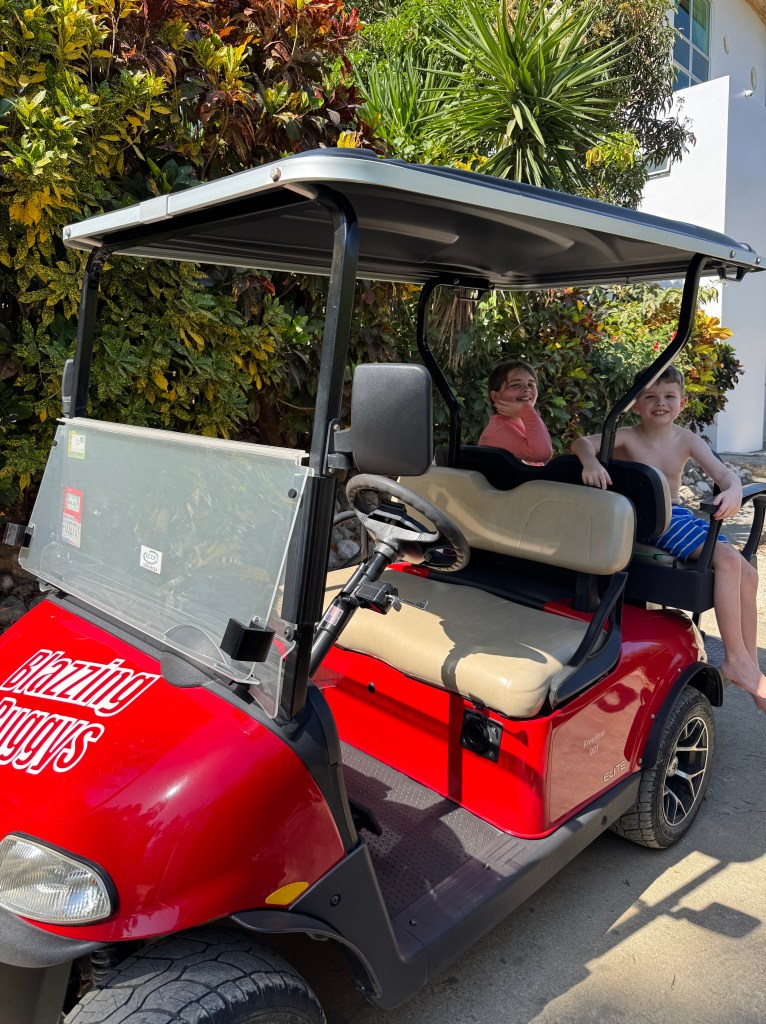
And were all about our daily golf cart rides down to the beach
Not included with the house but Blazing buggys drops it off and picks it up Kids and adults never wanted to get outThe kitchen opens up the backyard when all the doors are open. And against what I thought, there really weren’t any mosquitos Views are just ridiculous
💳 How We Paid for It (Without Paying Full Price)
Here’s where the magic happens.
Option 1: Use a Travel Card to “Erase” the Cost
We love using a card like theCapital One Venture X for Airbnb stays because you can:
You can budget ahead of time by buying gift cards gradually
You’re essentially turning a big expense into a points-earning machine
We used the signup bonus + points earned from gift cards to offset a big portion of this stay—and it made the whole trip feel way more doable.
And if you think you don’t qualify for a business card, message me and I can share how you probably do. Sell things on FB marketplace? Have any side hustle no matter the size? You probably qualify. Have a larger business, then applying should be straight forward. Message me and I can walk you through the process.
🌴 Final Thoughts (And the Airbnb Link 👀)
We absolutely fell in love with Costa Rica. Sámara was the perfect mix of laid-back beach town + adventure, and this Airbnb made it unforgettable.
Was it the most kid-friendly place ever? No. Would we stay there again in a heartbeat? 1000% yes.
If you’ve been wanting to travel more with your kids, this is your sign—it is possible. You just need the right mix of planning, points, and a little creativity.
Have questions about booking trips like this or using points for Airbnb stays? Send me a message—I’m always happy to help 💛
Spring break chaos + wild weather + TSA staffing shortages = travel days not so smooth lately 😵💫🥴😵💫
But here’s the hack most people sleep on 👇 The right travel card can completely change your airport experience.
✔️ TSA PreCheck = skip the long lines ✔️ Lounge access = calm, comfy, and FREE snacks/drinks
Trust me… these two perks alone make flying 10x smoother 🙌
Comment “TSA” and I’ll send you my full guide to stress-free travel days ✈️💼
How to Survive Travel Chaos (and Actually Enjoy the Airport)
Between spring break crowds, unpredictable weather, and TSA staffing shortages, flying lately can feel like a full-contact sport. Long lines, delays, and packed terminals are becoming the norm—but your travel experience doesn’t have to match the chaos.
The difference? Using the right credit card benefits strategically.
The Two Benefits That Change Everything
If you do nothing else, prioritize these:
1. TSA PreCheck (or Global Entry)
This is your fast pass through security.
Shorter lines
Keep shoes, belt, and laptop in your bag
Typically saves 20–40+ minutes
When airports are overwhelmed, this is the single biggest time-saver.
2. Airport Lounge Access
This is the upgrade most people underestimate.
Instead of fighting for a seat at a crowded gate, you get:
Quiet, clean space to relax
Free food and drinks
Wi-Fi and charging stations
A much calmer environment during delays
When flights get pushed back, lounge access goes from “nice to have” to essential.
The Card I Use: Venture X
Venture X + Priority Pass
To really level up your travel setup, I also recommend the Capital One Venture X.
What makes Venture X so powerful:
✔️ Includes Priority Pass membership
✔️ Access to 1,300+ lounges worldwide
✔️ TSA PreCheck / Global Entry credit
✔️ Capital One lounge access (at select airports)
Why Priority Pass is clutch
It gives you:
Access to lounges across different airlines and airports
Options internationally and domestically
A backup plan when your primary lounge isn’t available